Account-based marketing

15 ABM tools, ranked by whether they actually build your target list

Account-based marketing fails at step one more often than anywhere else. Most platforms assume you already have the list. Very few will build it for you.

Updated August 202615 platforms18 min read

Every ABM deck starts the same way. Pick your accounts, then run coordinated plays against them.

Step two gets all the software. Step one gets almost none.

That is the gap I kept hitting. You can buy a platform that will serve ads to your target accounts, personalise your website for them, score their intent and route them to a rep. What almost none of them do is tell you which accounts should be on the list in the first place.

So that is the axis I ranked on. Not features, not price. Whether the tool builds your target account list, acts on a list you already have, or quietly assumes one exists.

It reorders the category quite a lot.

Three kinds of tool on this page

Builders produce the account list from scratch. There are fewer of these than the category implies, and they are the cheapest things here.

Amplifiers take a list and do something with it. Advertising, personalisation, routing, orchestration. This is most of the market.

Platforms do everything, cost enterprise money, and still expect you to bring a point of view about who you are targeting.

At a glance

Who builds the list, and who assumes you have one

The third column is the whole article. Ten of the fifteen will not publish a price either, which is worth knowing before you plan a budget around them.

#ToolBuilds the list?What it actually doesEntry priceSelf-serve?
1StackScanYes, from scratchFinds accounts by technology$39/moYes
2AlbacrossYes, from your trafficIdentifies visiting companiesFree tierYes
3WarmlyYes, from signalsVisitor and intent based outboundFrom ~$700/moYes
4BomboraPartlySupplies the intent everyone resellsQuote onlyNo
5RollWorksPartlyABM advertising and scoringFrom ~$975/moYes
6N.RichPartlyIntent led ABM advertisingQuote onlyNo
7Influ2NoAds to named individualsQuote onlyNo
8MutinyNoWebsite personalisationFrom ~$1,000/moPartly
9Metadata.ioNoAutomates paid campaignsQuote onlyNo
10QualifiedNoConverts traffic when it landsFrom ~$3,500/moPartly
11TerminusNoFull ABM platformQuote onlyNo
12Foundry ABMNoPlatform plus mediaQuote onlyNo
13Madison LogicNoMedia led ABMQuote onlyNo
14DemandbasePartlyEnterprise ABM platformQuote onlyNo
156sensePartlyEnterprise ABM with AI scoringQuote onlyNo

Scroll sideways for the full table. Prices are published starting rates in August 2026.
StackScan

StackScan is the only thing here that hands you the list

Builds the list Yes, from scratchEntry $39/moSelf-serve Yes

Ask an ABM vendor how you should pick your accounts and you will get a workshop, not an answer.

StackScan gives you an answer, and it costs $39.

You choose a technology, add a country and a TLD, and it returns every domain that matches out of an index covering 360 million plus domains.

For ABM that is the most defensible list-building logic there is. If you sell an integration, a migration or a replacement, the companies running the thing you plug into or replace are your target account list. You are not guessing at fit, you are observing it.

Say you sell a Salesforce add-on. Your list is companies running Salesforce. Say you displace a legacy analytics tool. Your list is everyone still on it.

That beats the usual method, which is exporting your closed-won accounts, eyeballing the industry codes, and calling the result an ideal customer profile.

Getting it into your stack is not an afterthought. Alongside CSV export with up to 20 fields per domain there is a REST API, native CRM integrations, Zapier and n8n, and an MCP server, so the list can land in the platform you actually run plays from.

The honest limit is that these are companies, not contacts, and it does not score intent. Pair it with an amplifier from further down this page.

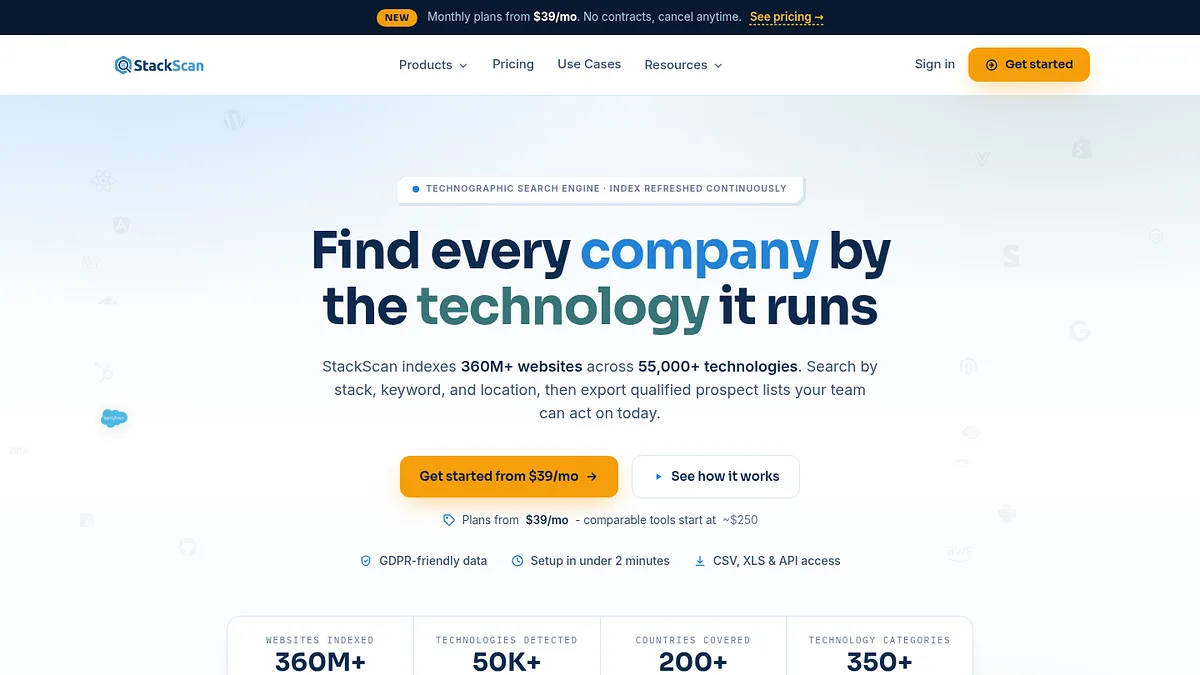
StackScan homepage screenshot
StackScan indexes 360 million plus domains across 55,000 technologies.
Start here. Every platform below is more capable and more expensive, and every one of them works better once you have brought a list worth targeting.

Worth paying for

  • +Produces the target account list rather than assuming one
  • +Technology fit is observed, not inferred from firmographics
  • +$39 against four and five figure platform minimums
  • +REST API and CRM integrations, so the list lands where you run plays
  • +No sales call to find out whether it works

Watch out for

  • Companies, not named contacts
  • No intent scoring, so pair it with Bombora or similar
  • Not an ABM platform, it is the step before one

Visit StackScan →

Albacross

Albacross builds a list out of people already looking

Builds the list Yes, from trafficEntry Free tierSelf-serve Yes

The second cheapest way to build an account list is to stop ignoring the one visiting your site.

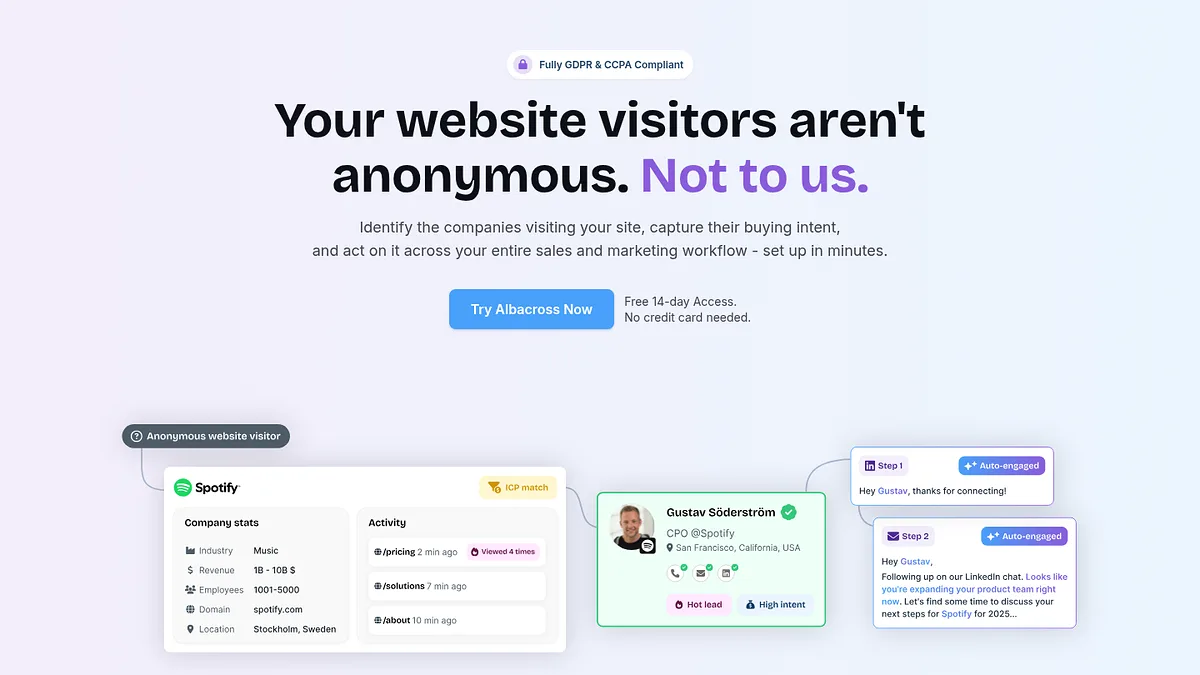
Albacross identifies the companies behind anonymous traffic and turns them into a list you can act on.

These accounts are qualitatively different from anything you buy. They already came to you, which means fit and timing are partly proven before you spend anything.

It is European in outlook, with GDPR compliance as a headline feature rather than a footnote, which matters if your legal team reads these contracts.

There is a free tier, and paid plans stay well below the ABM platform floor.

The obvious ceiling is your own traffic. If a thousand people visit a month, this is a small list, and no setting will change that.

Albacross homepage screenshot
Albacross identifies visiting companies and leans hard on GDPR compliance.
My take: run it alongside StackScan. One finds accounts that fit, the other finds accounts already interested. The overlap is your best list.

Worth paying for

  • +Turns existing traffic into a target account list
  • +Free tier is genuinely usable
  • +GDPR posture built in rather than bolted on
  • +Accounts arrive pre-qualified by their own behaviour

Watch out for

  • Volume is capped by your traffic
  • Company level only, not individuals
  • Little use if nobody is visiting yet

Visit Albacross →

Warmly

Warmly stitches signals into a list and works it for you

Builds the list Yes, from signalsEntry From ~$700/moSelf-serve Yes

Warmly sits between list building and outreach, which is unusual and useful.

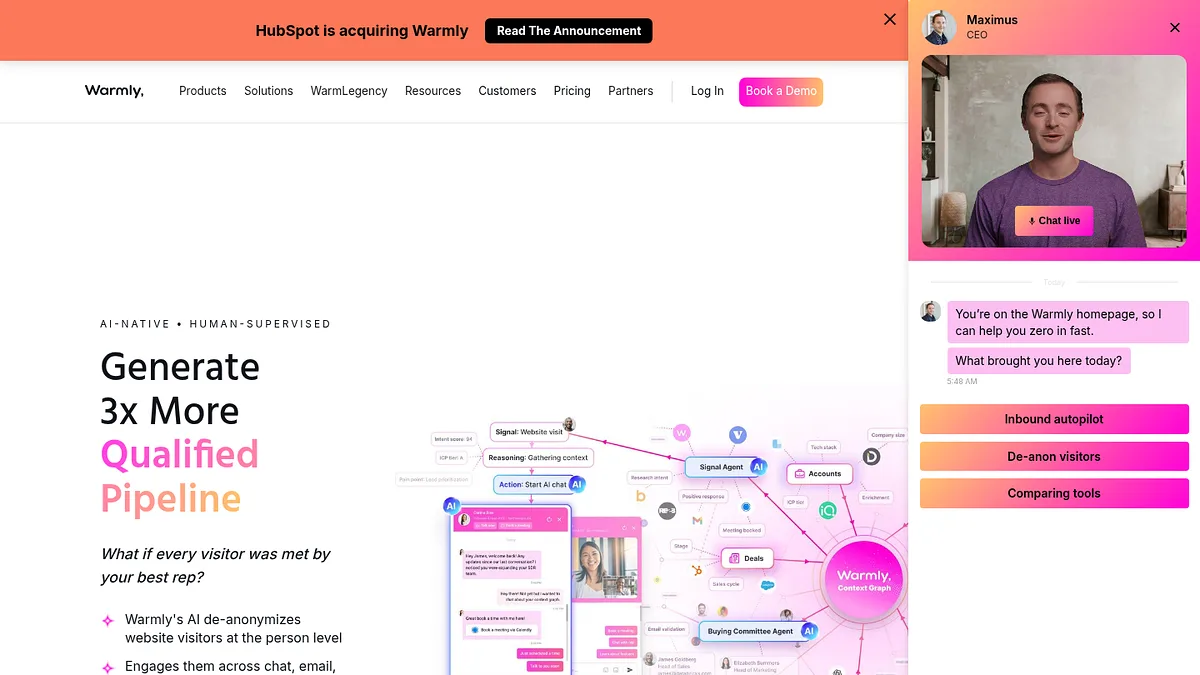
It identifies visitors, layers third party intent on top, and then actually acts, with automated email and LinkedIn touches on the accounts that light up.

The pitch is warm outbound. Rather than a cold list you bought, you are working accounts that have done something.

Pricing starts around $700 a month, which puts it well above the self-serve tools and well below the enterprise platforms.

That middle position is its whole appeal. You get orchestration without a six figure commitment or a six month rollout.

It is also a lot of moving parts for a small team, and the automation needs supervision if you care how your brand sounds.

Warmly homepage screenshot
Warmly combines visitor identification with intent and automated outreach.
My take: the best single purchase if you want signals and action without buying a platform.

Worth paying for

  • +Builds the list and works it in one product
  • +Warm signals rather than a cold purchased list
  • +Priced between self-serve and enterprise
  • +Fast to set up compared to a platform

Watch out for

  • Around $700 a month is a real commitment
  • Automated outreach needs supervision
  • Signal quality varies by market

Visit Warmly →

Bombora

Bombora is the intent data the others resell

Builds the list PartlyEntry Quote onlySelf-serve No

When an ABM platform tells you an account is showing intent, there is a decent chance Bombora is where that came from.

It runs a co-operative of B2B publishers and reports which companies are consuming content on which topics.

That makes it a partial list builder. It will not tell you who fits your product, but it will tell you who is researching your category this week.

Combine it with a fit list and you get the pairing that ABM actually runs on: right company, right moment.

Pricing is quote only, and it is usually bought through a platform rather than directly.

Topic intent is noisy on its own. An account researching a category is not the same as an account with budget, and treating it that way is how teams burn goodwill.

Bombora homepage screenshot
Bombora operates the co-operative that supplies intent to much of the category.
My take: intent tells you when. Something like StackScan tells you who. You need both and people routinely buy only the first.

Worth paying for

  • +The underlying source rather than a resold layer
  • +Adds timing, which fit data cannot
  • +Huge publisher co-operative behind the signal
  • +Integrates with essentially every platform here

Watch out for

  • No published pricing
  • Usually bought through a platform
  • Topic intent is noisy without a fit filter
  • Company level, never individual

Visit Bombora →

RollWorks

RollWorks is the most approachable real ABM platform

Builds the list PartlyEntry From ~$975/moSelf-serve Yes

Most ABM platforms start at numbers that end a conversation. RollWorks starts around $975 a month and publishes it.

You get account identification, fit scoring, advertising and measurement in one place, aimed squarely at mid-market rather than enterprise.

Its scoring will help refine a list, which is why it counts as a partial builder, though it works far better when you arrive with one.

Being part of NextRoll means the advertising side is genuinely strong rather than an afterthought bolted onto a data product.

The trade is depth. Orchestration is thinner than Demandbase or 6sense, and complex multi-play programmes will hit the edges.

RollWorks homepage screenshot
RollWorks brings account scoring and advertising to mid-market budgets.
My take: the sensible first ABM platform. Buy it once you have a list worth advertising against.

Worth paying for

  • +Published entry pricing, rare in this category
  • +Advertising is a core strength, not an add-on
  • +Mid-market pricing and expectations
  • +Fast to launch relative to enterprise platforms

Watch out for

  • Around $975 a month is still a real floor
  • Orchestration is shallower than the enterprise tier
  • Works best if you bring your own list

Visit RollWorks →

N.Rich

N.Rich puts intent in front of the advertising

Builds the list PartlyEntry Quote onlySelf-serve No

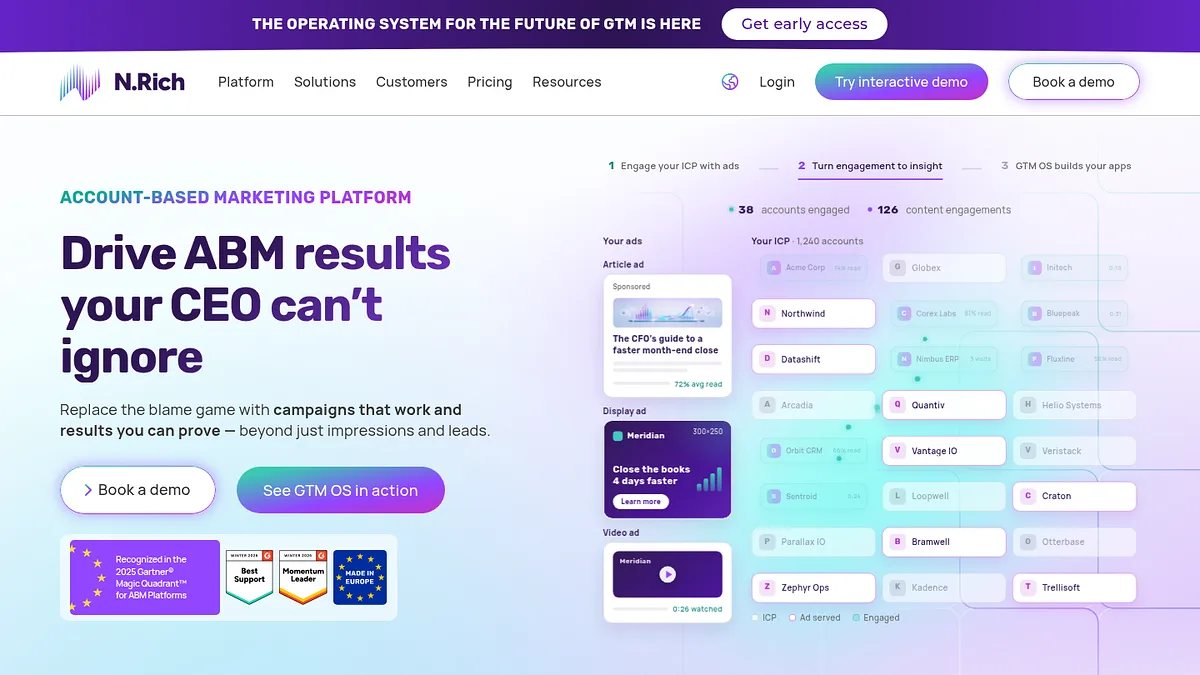
N.Rich is an intent-led ABM advertising platform, strongest in Europe.

It segments accounts by intent and runs display against the segments, then reports which accounts moved.

The partial list building comes from that segmentation, which can surface accounts you had not put on the list yourself.

It is a smaller vendor than the American platforms, which usually means more attentive support and fewer integrations.

Pricing is quote only, and you should expect a floor rather than a monthly card payment.

N.Rich homepage screenshot
N.Rich leads with intent segmentation and runs advertising off it.
My take: worth a look for European mid-market teams that want intent without a Demandbase contract.

Worth paying for

  • +Intent segmentation genuinely drives the targeting
  • +Strong European coverage and support
  • +Simpler than the enterprise suites
  • +Attentive service from a smaller vendor

Watch out for

  • No published pricing
  • Fewer integrations than the majors
  • Advertising led, so thin on other channels
  • Smaller intent pool than Bombora

Visit N.Rich →

Influ2

Influ2 advertises to named people, not companies

Builds the list NoEntry Quote onlySelf-serve No

Almost all ABM advertising targets a company and hopes the right person sees it.

Influ2 targets the person. You supply named individuals and it puts ads in front of those specific people, then reports who engaged by name.

For long buying committees that reporting is the real product. Knowing that the CFO clicked twice last week changes the next call.

It builds nothing. You must arrive with named contacts at named accounts, which puts it firmly in the amplifier category.

Pricing is quote only and it is not a small purchase.

Influ2 homepage screenshot
Influ2 targets individual buyers by name rather than whole accounts.
My take: buy it late, once you know your accounts and your committee. Useless as a starting point.

Worth paying for

  • +Person level targeting and reporting
  • +Shows which individual buyers engaged
  • +Excellent for mapping a buying committee
  • +Strong pairing with a sales-led motion

Watch out for

  • Builds no list at all
  • No published pricing
  • Needs named contacts before it does anything
  • Narrow, it does one channel

Visit Influ2 →

Mutiny

Mutiny changes the site for the accounts you already targeted

Builds the list NoEntry From ~$1,000/moSelf-serve Partly

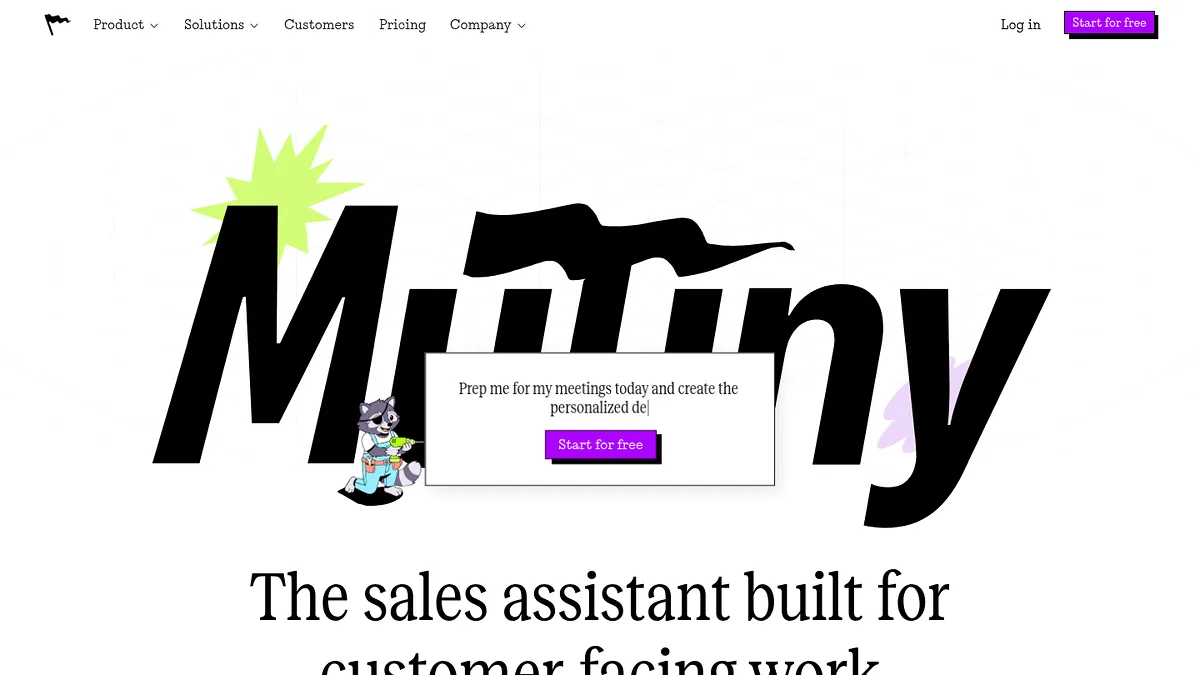
Mutiny personalises your website for the accounts you are targeting, without needing engineering time for every variant.

A visitor from a target account sees their industry, their logo, their use case. Everyone else sees the default.

It is the last mile of ABM. The list is already decided, the ads already ran, and this is what happens when the click lands.

That makes it valuable and entirely dependent on the work before it. Personalising for a badly chosen list just makes the wrong message more specific.

Around $1,000 a month, with a real setup effort behind the marketing.

Mutiny homepage screenshot
Mutiny personalises landing pages per account or segment without engineering.
My take: excellent, and the last thing you should buy rather than the first.

Worth paying for

  • +Removes engineering from page personalisation
  • +Measurable lift on landing pages
  • +Good template library to start from
  • +Pairs with any advertising tool here

Watch out for

  • Builds nothing, purely a downstream layer
  • Around $1,000 a month plus setup effort
  • Needs meaningful traffic to be worth it
  • Poor list makes it actively counterproductive

Visit Mutiny →

Metadata.io

Metadata.io runs the paid campaigns so you do not have to

Builds the list NoEntry Quote onlySelf-serve No

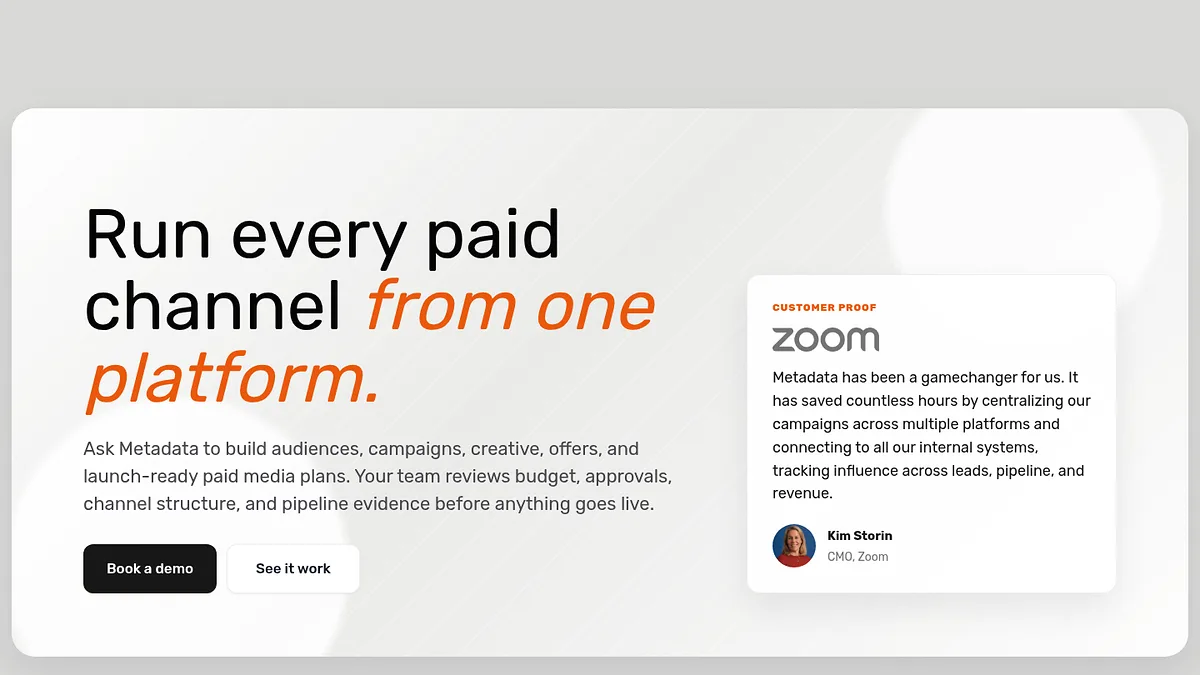
Metadata.io automates the tedious half of paid ABM. Building the campaigns, testing the permutations, moving budget to what works.

You give it audiences and creative, it runs the experiments across channels and reallocates spend without a human touching the ad platforms daily.

For a small team spending real money on paid, that is a genuine multiplier.

It builds no list. Audiences come from you or from your CRM, and the quality of everything downstream depends on them.

Quote only pricing, aimed at teams with meaningful paid budgets rather than experimenters.

Metadata.io homepage screenshot
Metadata.io automates paid campaign creation, testing and budget allocation.
My take: a force multiplier on paid spend. It multiplies whatever list you feed it, in both directions.

Worth paying for

  • +Automates campaign construction and testing
  • +Reallocates budget without daily babysitting
  • +Works across several paid channels
  • +Strong experiment reporting

Watch out for

  • No list building at all
  • No published pricing
  • Only pays off with a real paid budget
  • Another layer between you and the ad platforms

Visit Metadata.io →

Qualified

Qualified catches the target account when it finally shows up

Builds the list NoEntry From ~$3,500/moSelf-serve Partly

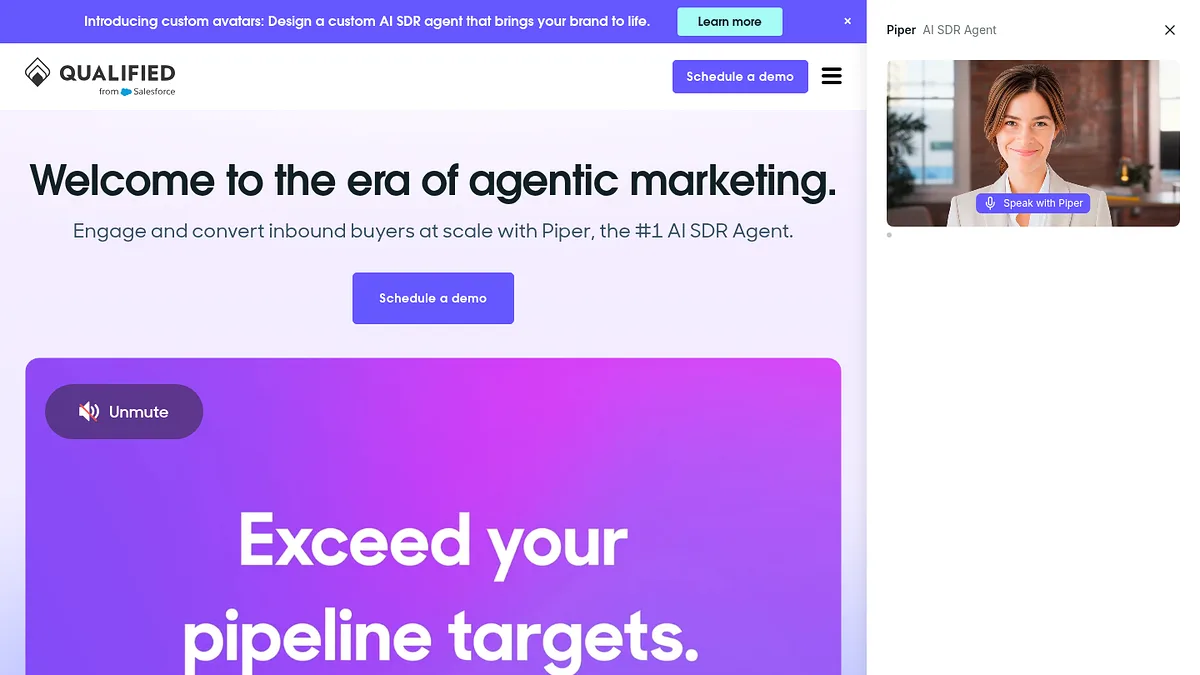
You have spent months getting a target account to visit. Qualified is what happens in the next ninety seconds.

It identifies the visitor, checks them against your target list, and routes them to a rep or an AI agent immediately rather than through a form and a queue.

Built tightly around Salesforce, which is either the reason to buy it or the reason you cannot.

It builds nothing. It is pure conversion at the end of the funnel.

From around $3,500 a month, so it needs enough qualified traffic to justify itself.

Qualified homepage screenshot
Qualified routes and converts identified visitors in real time.
My take: the right last mile if you already have traffic from target accounts. Pointless if you do not.

Worth paying for

  • +Real time routing beats a form every time
  • +Deep Salesforce integration
  • +AI agents cover hours nobody is staffing
  • +Directly attributable pipeline

Watch out for

  • Expensive floor at around $3,500 a month
  • Salesforce centric
  • Builds no list
  • Needs real traffic volume to pay off

Visit Qualified →

Terminus

Terminus is a full platform that still wants your list

Builds the list NoEntry Quote onlySelf-serve No

Terminus is a proper ABM suite. Advertising, email signature marketing, chat, web personalisation and measurement in one contract.

Its measurement is the strongest part. Attributing pipeline to account level activity is genuinely hard and it does it better than most.

What it does not do is decide who to target. You arrive with the list.

Quote only pricing at enterprise levels, with the implementation timeline that implies.

It has been through ownership changes in recent years, which is worth asking about before signing a multi year term.

Terminus homepage screenshot
Terminus covers advertising, email and measurement across the ABM funnel.
My take: buy it for the measurement. Do not expect it to tell you who to target.

Worth paying for

  • +Genuinely full funnel coverage
  • +Account level measurement is best in class
  • +Email signature marketing is an underrated channel
  • +Mature integrations

Watch out for

  • No list building
  • No published pricing
  • Long implementation
  • Ownership changes worth diligence

Visit Terminus →

Foundry ABM

Foundry sells the platform and the audience together

Builds the list NoEntry Quote onlySelf-serve No

Foundry, formerly IDG and then Triblio, is unusual in owning both the platform and a large B2B media estate.

That means the intent data comes from publications it operates rather than a co-operative it buys into.

For technology vendors specifically, that audience is unusually well matched, since the publications are read by exactly the IT buyers you are chasing.

The platform itself covers orchestration, advertising and web personalisation competently rather than exceptionally.

Quote only pricing, and the media relationship tends to become part of the deal.

Foundry ABM homepage screenshot
Foundry pairs its ABM platform with its own media properties.
My take: worth a conversation if you sell technology to IT buyers. Ask what is platform and what is media.

Worth paying for

  • +Owns its own intent source rather than reselling
  • +Audience is a strong fit for technology vendors
  • +Platform and media in one relationship
  • +Long history in B2B technology media

Watch out for

  • No list building
  • No published pricing
  • Platform is competent rather than leading
  • Media bundling can obscure what you are buying

Visit Foundry ABM →

Madison Logic

Madison Logic is ABM as a media buy

Builds the list NoEntry Quote onlySelf-serve No

Madison Logic approaches ABM from the media side rather than the software side.

It runs coordinated campaigns across display, content syndication and social against your account list, and reports on account engagement.

Content syndication is the differentiator. It will put your whitepaper in front of target accounts and hand back the leads, which most platforms will not.

None of that helps you decide the list. You supply it, they run media against it.

Quote only, with media minimums on top of any platform fee.

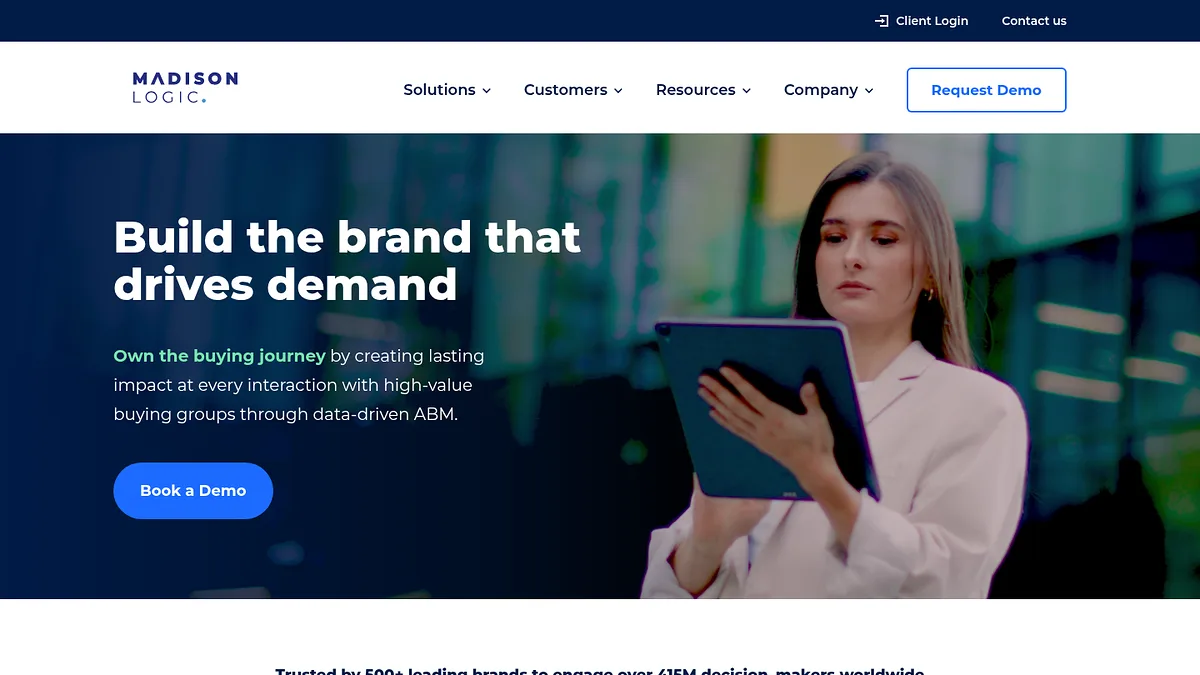
Madison Logic homepage screenshot
Madison Logic runs multi-channel ABM media across display, content and social.
My take: useful if you have content worth syndicating and budget to put behind it.

Worth paying for

  • +Content syndication genuinely generates leads
  • +Coordinated across several media channels
  • +Good account engagement reporting
  • +Strong international reach

Watch out for

  • No list building
  • No published pricing
  • Media minimums on top of platform cost
  • More agency than software in practice

Visit Madison Logic →

Demandbase

Demandbase is the enterprise answer, at enterprise cost

Builds the list PartlyEntry Quote onlySelf-serve No

Demandbase is one of the two names that turn up on every enterprise ABM shortlist.

Account intelligence, intent, advertising, orchestration and sales intelligence in a single platform, with the data depth to back it.

It counts as a partial builder because its account intelligence will genuinely suggest accounts you had not considered, using its own firmographic and intent data.

That is a real capability and it is priced accordingly. Quote only, enterprise commitments, and an implementation measured in quarters.

For a large team with a dedicated ABM function it consolidates a lot of tools. For anyone smaller it is a very expensive way to reach a conclusion you could have reached for $39.

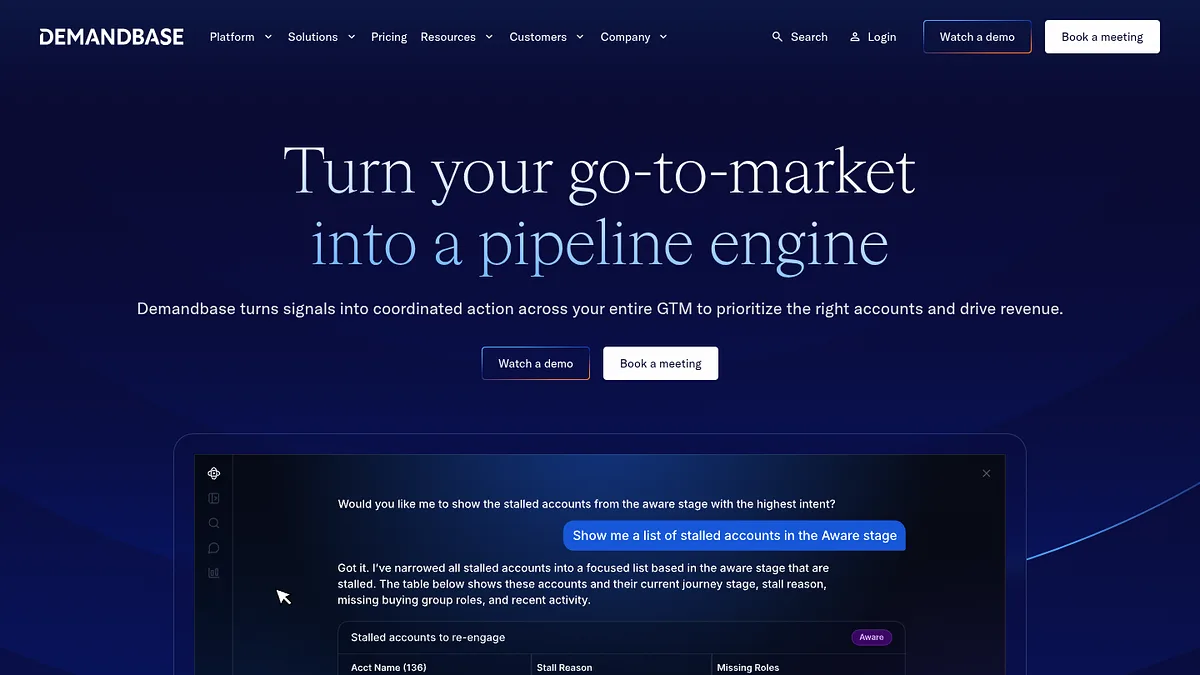
Demandbase homepage screenshot
Demandbase combines account intelligence, advertising and orchestration.
My take: the right answer for a funded ABM function. The wrong first purchase for everyone else.

Worth paying for

  • +Genuine account discovery, not just targeting
  • +Consolidates several categories of tool
  • +Deep data behind the recommendations
  • +Mature orchestration across channels

Watch out for

  • No published pricing, enterprise commitments
  • Implementation measured in quarters
  • Overkill below a dedicated ABM team
  • You still need a point of view it cannot supply

Visit Demandbase →

6sense

6sense predicts the buying stage, if you can afford the question

Builds the list PartlyEntry Quote onlySelf-serve No

6sense is the other name on every enterprise shortlist, and its distinctive claim is prediction rather than description.

Instead of telling you an account fits, it estimates where that account sits in a buying cycle, from unaware through to decision.

When that works it is the most useful signal in the category, because it answers the timing question that fit data never can.

It builds partially. The AI will surface in-market accounts you had not listed, which is genuine discovery rather than filtering.

Quote only, enterprise pricing, and a rollout that needs someone to own it full time. The predictions are also only as good as the data you connect, which is the part vendors gloss over.

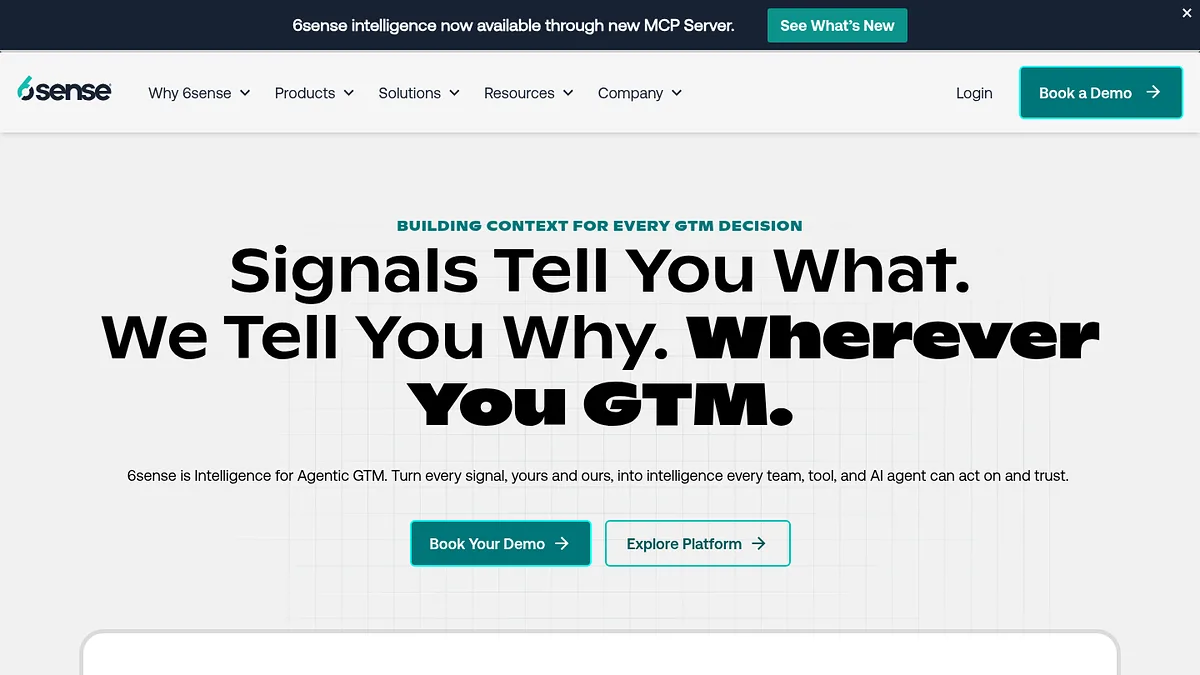
6sense homepage screenshot
6sense scores accounts by predicted buying stage rather than fit alone.
My take: the most sophisticated tool here and the least appropriate first purchase. Earn your way to it.

Worth paying for

  • +Buying stage prediction rather than static scoring
  • +Surfaces in-market accounts you had not listed
  • +Strong orchestration and advertising
  • +Consolidates intent, data and activation

Watch out for

  • No published pricing, enterprise only
  • Needs a dedicated owner to work
  • Predictions depend on the data you feed it
  • Long rollout before value

Visit 6sense →

The order

Build it in this sequence

ABM goes wrong at the list, then everything downstream amplifies the error.

Build it in this order and the expensive tools work far better when you get to them.

  1. Decide what observable fact makes an account a fit
    Not an industry code. Something you can see from outside, like the software they run or the platform they sell on.
  2. Build the list from that fact StackScan
    Filter by technology, country and TLD, and export it. This is the cheapest step and the one that decides everything after it.
  3. Add the accounts already visiting you Albacross
    They have proven fit and timing at once. The overlap with your fit list is your priority tier.
  4. Layer timing on top Bombora
    Fit tells you who. Intent tells you when. Running plays without the second wastes the first.
  5. Advertise against it RollWorks
    Only now does an ABM platform earn its money, because it finally has something worth targeting.
  6. Personalise where they land Mutiny
    The last mile. Worth doing only once the first four steps are right.

Why so much ABM software disappoints

Because the category sells activation and the failure is nearly always selection.

A platform that serves ads to 500 accounts will serve them just as efficiently whether or not those accounts could ever buy from you.

Nothing in the software will tell you the list is wrong. The dashboards will look busy either way.

Which is why the cheapest tool on this page is at the top. Get the list right and the expensive tools finally do what the demo promised.

Questions

Things people ask

How many accounts should be on an ABM list?

Fewer than you think, and it depends on the tier.

One to one ABM is tens of accounts with genuinely bespoke work. One to few is hundreds grouped by shared characteristics. One to many is thousands and is really just well targeted marketing.

The common failure is running a one to many list with one to one expectations, then concluding ABM does not work.

Do I need an ABM platform at all?

Not to start, and starting without one teaches you what you actually need.

A target list, a way to reach the people on it and a way to measure what happened will take you a long way. That can be a $39 list tool, an outbound sequencer and a spreadsheet.

Buy a platform when coordination across channels is the bottleneck, not before.

What is the difference between fit and intent?

Fit is whether an account could buy. Intent is whether they are looking right now.

Fit comes from observable characteristics, and technology usage is the most reliable of them because it is a fact rather than an inference.

Intent comes from behaviour, either on your own site or across a publisher network like Bombora.

You need both. Fit without intent is a list with no timing. Intent without fit is chasing people who were never going to buy.

Why is a $39 tool ranked above platforms costing thousands?

Because they answer different questions and only one of them is step one.

This ranking is about who builds the target account list. Almost every platform here assumes you arrive with it, which is a large assumption given that is where ABM usually fails.

None of it says the platforms are not worth their price. It says they are worth it later.

Can I do ABM without intent data?

Yes, and most teams should start that way.

Intent data is expensive, noisy and easy to over-read. A tight fit-based list worked consistently will outperform a loose list with intent scores on it.

Add intent once you have proven the fit logic works, and use it to prioritise rather than to select.

Method

How this was ranked

One axis, applied consistently.

Does the tool produce your target account list, or does it act on one you already have? Builders rank above amplifiers, amplifiers above platforms that assume a list exists.

That is a deliberately narrow lens and it is not a judgement of overall quality. Demandbase and 6sense are more capable products than anything in the top five. They are also the wrong thing to buy first.

Prices are published list rates where vendors publish them. Ten of the fifteen do not, which is itself worth knowing before you plan a budget.

Figures marked approximate come from published starting points and move often. Verify before you commit.

Once you have the list

Filling it with contacts is a separate problem with its own economics. We compared 17 lead generation tools by what a lead actually costs. If your market is online merchants specifically, we also compared 15 tools for finding Shopify stores to sell to. A competitor's customer base is another way to build the list: see 15 competitor analysis tools. Once the accounts are chosen, 15 data enrichment tools cover filling in the fields that decide what your reps say.